
Most franchisors believe their biggest challenge is getting more franchise leads.
In reality, the bigger problem is what happens after the lead comes in.
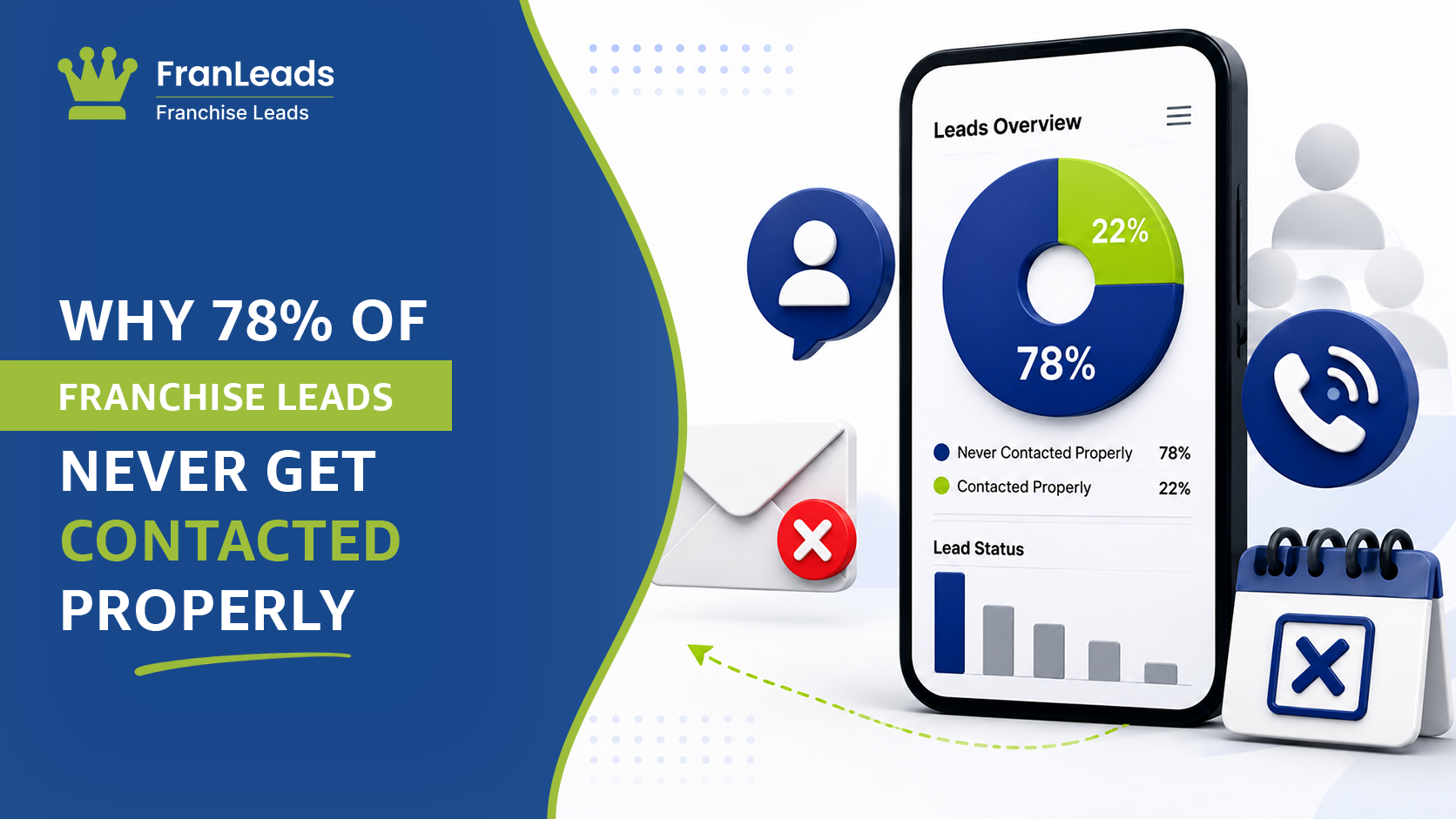
Only 78% of franchise leads are contacted correctly or even at all across franchise systems. Not because brands don’t care, but because follow up systems occur repeatedly, invisibly and quietly.
The result is lost territories, wasted ad spend, frustrated buyers, and slower expansion.
Here’s why this happens, and why fixing it is one of the highest-ROI moves a franchise brand can make.
Table of Contents
- Franchise Lead Follow-Up Is Treated as a Task, Not a System
- Speed-to-Lead Is Slower Than Franchisors Realize
- Leads Aren’t Prioritized by Buyer Intent
- Franchisors Rely Too Heavily on Single-Channel Contact
- CRM Usage Is Inconsistent or Misaligned
- Sales Teams Aren’t Aligned With Marketing
- Buyers Interpret Poor Follow-Up as Brand Weakness
- The Cost of Poor Follow-Up Is Massive—and Hidden
- The Brands That Win Treat Follow-Up as Infrastructure
- Retargeting: Recovering Lost Intent
1. Franchise Lead Follow-Up Is Treated as a Task, Not a System

Many franchisors rely on manual processes:
- One person checking inboxes
- Leads forwarded via email
- Notes tracked in spreadsheets
- Calls made “when there’s time”
This approach works at low volume. It collapses at scale.
Franchise lead follow-up must be a system, not a responsibility. When there is no prioritization and no accountability, and no automation, leads always fall through the cracks.
2. Speed-to-Lead Is Slower Than Franchisors Realize
Franchise buyers are researching multiple brands simultaneously.
Industry data consistently shows:
- Contact within 5 minutes → dramatically higher engagement
- Contact after 1 hour → major drop-off
- Contact after 24 hours → lead often cold
Most franchisors will reply in hours or days afterwards, assuming the buyer will still be interested. At this time, the buyer is already booked on other calls.
Slow follow-up is not an urgent thought internally but it is an external deciding thought.
3. Leads Aren’t Prioritized by Buyer Intent
Not all franchise leads are equal.
Yet many systems treat:
- A high-net-worth, territory-ready buyer
- And a casual inquiry with no capital
…exactly the same.
Without lead scoring, segmentation, or intent signals, sales teams waste time on low-quality inquiries while high-quality buyers disengage due to delayed or generic outreach.
4. Franchisors Rely Too Heavily on Single-Channel Contact
Many brands still rely almost entirely on email or phone calls.
But modern franchise buyers:
- Miss unknown calls
- Ignore generic emails
- Expect multi-touch, multi-channel engagement
Effective follow-up requires:
- Calls + email
- SMS reminders
- Calendar links
- Educational content
One-touch follow-up is not follow-up, it’s a missed opportunity.
Ready to Scale Your Franchise Brand?
Every lead that reaches your inbox has already been vetted and matched to your territory, so you only speak with serious buyers.
5. CRM Usage Is Inconsistent or Misaligned
Most franchisors have a CRM.
Few use it correctly.
Common issues include:
- Leads marked “contacted” after one attempt
- No automated reminders
- No SLA for response times
- No visibility into stalled leads
- No reporting tied to outcomes
When CRMs are used as databases instead of workflow engines, lead leakage is inevitable.
6. Sales Teams Aren’t Aligned With Marketing
Marketing celebrates lead volume. Sales complains about quality.
This disconnect creates:
- Poor handoffs
- Blame instead of optimization
- Inconsistent follow-up standards
- No shared definition of “qualified”
When marketing and sales aren’t aligned around lead quality, response time, and conversion metrics, performance stalls.
7. Buyers Interpret Poor Follow-Up as Brand Weakness
From the buyer’s perspective, slow or inconsistent follow-up signals:
- Lack of professionalism
- Disorganized systems
- Weak support infrastructure
- Risk in the franchise model
Even strong franchise concepts lose credibility when communication breaks down early.
Franchise buyers don’t just evaluate the opportunity, they evaluate how the system operates.
8. The Cost of Poor Follow-Up Is Massive—and Hidden
Missed follow-up doesn’t show up as a line item.
But it shows up as:
- Higher CPL over time
- Lower close rates
- Slower territory fill
- Underperforming franchisees
- Frustrated development teams
Brands often try to fix this by buying more leads when the real fix is improving follow-up execution.
9. The Brands That Win Treat Follow-Up as Infrastructure
Top-performing franchise systems:
- Enforce speed-to-lead SLAs
- Use automation for first contact
- Score and route leads intelligently
- Track outcomes, not just attempts
- Continuously refine their process
For them, follow-up isn’t sales admin, it’s growth infrastructure.
FAQ
Slow response times, manual processes, inconsistent CRM usage, and unclear follow-up responsibilities are common causes of franchise lead follow-up failures.
The first response should ideally be within minutes. Quick follow-ups keep buyers engaged and help prevent them from exploring other franchise options.
Poor follow-up can result in lower conversion rates, reduced marketing ROI, slower territory growth, and lost franchise opportunities.
Yes. Automation can instantly respond to leads, send reminders, route leads, and initiate multi-channel outreach while reducing the risk of leads being neglected.
Brands can establish response-time SLAs, apply lead scoring, automate initial contact, and monitor follow-up performance through their CRM.
Conclusion
The biggest leak in franchise lead generation isn’t traffic, ads, or CPL.
It’s a follow-up.
When 78% of leads aren’t contacted properly, growth slows no matter how much you spend on marketing. The franchisors that scale fastest don’t just generate demand, they capture it consistently.
In modern franchising, winning isn’t about getting more leads.
It’s about not wasting the ones you already have.
Ready to Scale Your Franchise Brand?
Every lead that reaches your inbox has already been vetted and matched to your territory, so you only speak with serious buyers.

