
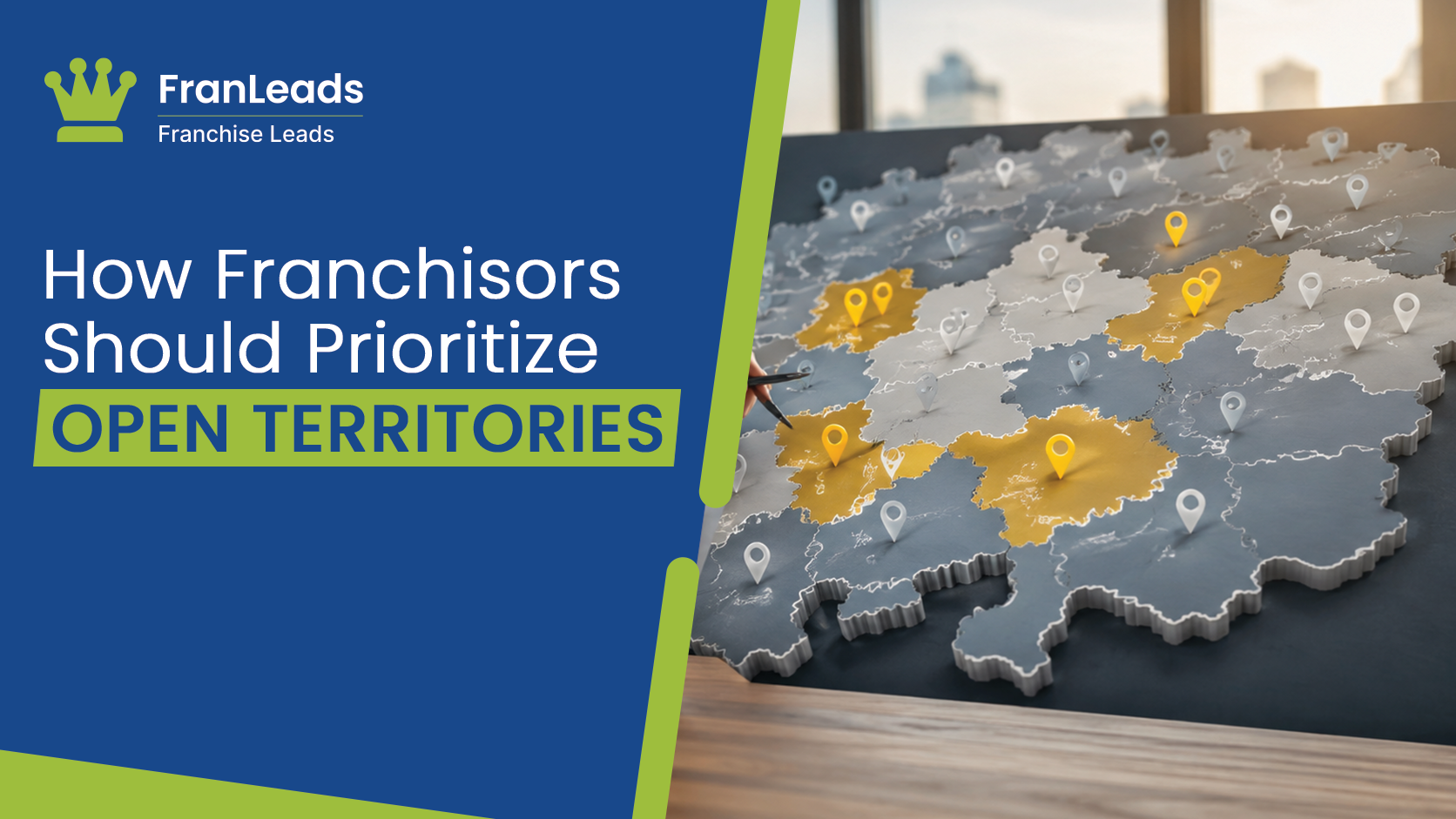
One of the biggest mistakes that new franchise brands make is treating all territories equally.
They aren’t.
Some markets award faster.
Some produce stronger franchisees.
Some provide more optimal unit economics in terms of long-term sustainability.
You’re not just selling territories.
A strategic franchise territory selection process helps franchisors identify the right markets and prioritize them for sustainable growth.
There are two reasons for this: First, because unless you prioritize a smart territory selection process, you might be putting the brakes on actual franchise growth.
Table of Contents
- Not Every Market Is Right For The Opportunity
- Begin With Validated Market Profiles
- Prioritize Population Growth
- Look For Territory Density Opportunities
- Evaluate Competitive Saturation
- Follow Franchise Buyer Demand
- SConsider Multi-Unit Expansion Potential
- Align Territory Selection With Brand Type
- Create A System For Territorium Rankings
- Long-Term Implementation vs. Quick Sale
Not Every Market Is Right For The Opportunity
A lot of franchisors take for granted that each available territory needs to be treated equally.
The ugly truth is, markets differ wildly on:
- population growth
- household income
- business density
- competitive landscape
- demographic fit
Unfortunately, not all territories lend themselves to robust expansion opportunities as naturally as others.
That should get priority in the development strategy.
Begin With Validated Market Profiles
The best place to start with franchise territory selection is to look at existing successful locations.
Questions to ask:
What are the commonalities in units of varying types that have high performance?
What population ranges are the most suitable?
What are the income levels that correlate with success?
What market characteristics repeat?
The best markets to enter leave evidence of future projections.
Prioritize Population Growth
Strong long-term opportunities are most often found in the growing markets.
Population growth often leads to:
- increased demand
- new housing developments
- more commercial activity
- greater consumer spending
Operating in new, expanding markets can enhance franchisee performance while increasing the value of their territories.
Look For Territory Density Opportunities
Not all topography is the biggest.
This is the nearest to current activities.
Territory density can improve:
- brand awareness
- regional marketing efficiency
- operational support
- referral activity
Aiming for clusters of successful territories is often more effective than gathering scattered territories.
Ready to Scale Your Franchise Brand?
Every lead that reaches your inbox has already been vetted and matched to your territory, so you only speak with serious buyers.
Evaluate Competitive Saturation
A large market is not always attractive.
Some areas may already have:
- intense competition
- market saturation
- limited differentiation opportunities
Or well-stated as this: strong franchisors consider their competitive positioning before going after a territory with all tubes blazing.
Follow Franchise Buyer Demand
Naturally, there are some territories that bring up more buyer consideration levels.
These often include:
- major metro areas
- fast-growing suburban regions
- high-income communities
- business-friendly markets
Sales for franchises usually go faster when there is demand already in place.
Consider Multi-Unit Expansion Potential
Some territories are ideal for:
- area developers
- multi-unit operators
- master franchise opportunities
Franchisors can often get larger development agreements instead of individual unit sales, speeding up regional growth.
Align Territory Selection With Brand Type
Various franchise selections succeed best in specific backdrops.
For example:
Senior care may focus on the elderly.
Suburban growth may be top priority for home services.
Logistics may overprioritize commercial density.
Wealthier communities may have an advantage in fitness.
Territory prioritization should align to the business model.
Create A System For Territorium Rankings

The strongest franchise brands uses a scorecard to score territories based on:
- population size
- growth rate
- household income
- competitive strength
- buyer demand
- expansion potential
This makes for a more data-driven development plan.
Long-Term Implementation vs. Quick Sale
There are some fast-track opportunities, but they may have little long-term impact.
While some could take longer to sell, but become large regional growth engines.
The best franchisors balance:
- short-term franchise sales
- long-term territory development
because sustainable growth cannot exist without both.
FAQ
The focus on territories enables the franchisor to concentrate on growth markets, customer demand, and franchisee performance over the long term.
Population growth, household income, business density, competition, buyer demand, and expansion potential are all key factors.
Growing populations can increase demand, consumer spending, housing development, and commercial activity, creating stronger expansion opportunities.
Groups of territories can enhance brand awareness, regional marketing effectiveness, operational support, and referrals.
Franchisors need to balance fast sales with territories that have greater potential for long-term growth of the region.
Conclusion
One of the most critical strategic decisions a franchisor can make is about territory prioritization.
The strongest brands focus on:
- proven market characteristics
- population growth
- territory density
- buyer demand
- long-term scalability
Because in franchise development:
Selling a territory creates revenue.
Choosing the right territory is key to growth.
Ready to Scale Your Franchise Brand?
Every lead that reaches your inbox has already been vetted and matched to your territory, so you only speak with serious buyers.

