
Most franchise brands focus heavily on lead generation.
Very few focus with the same discipline on follow-up.
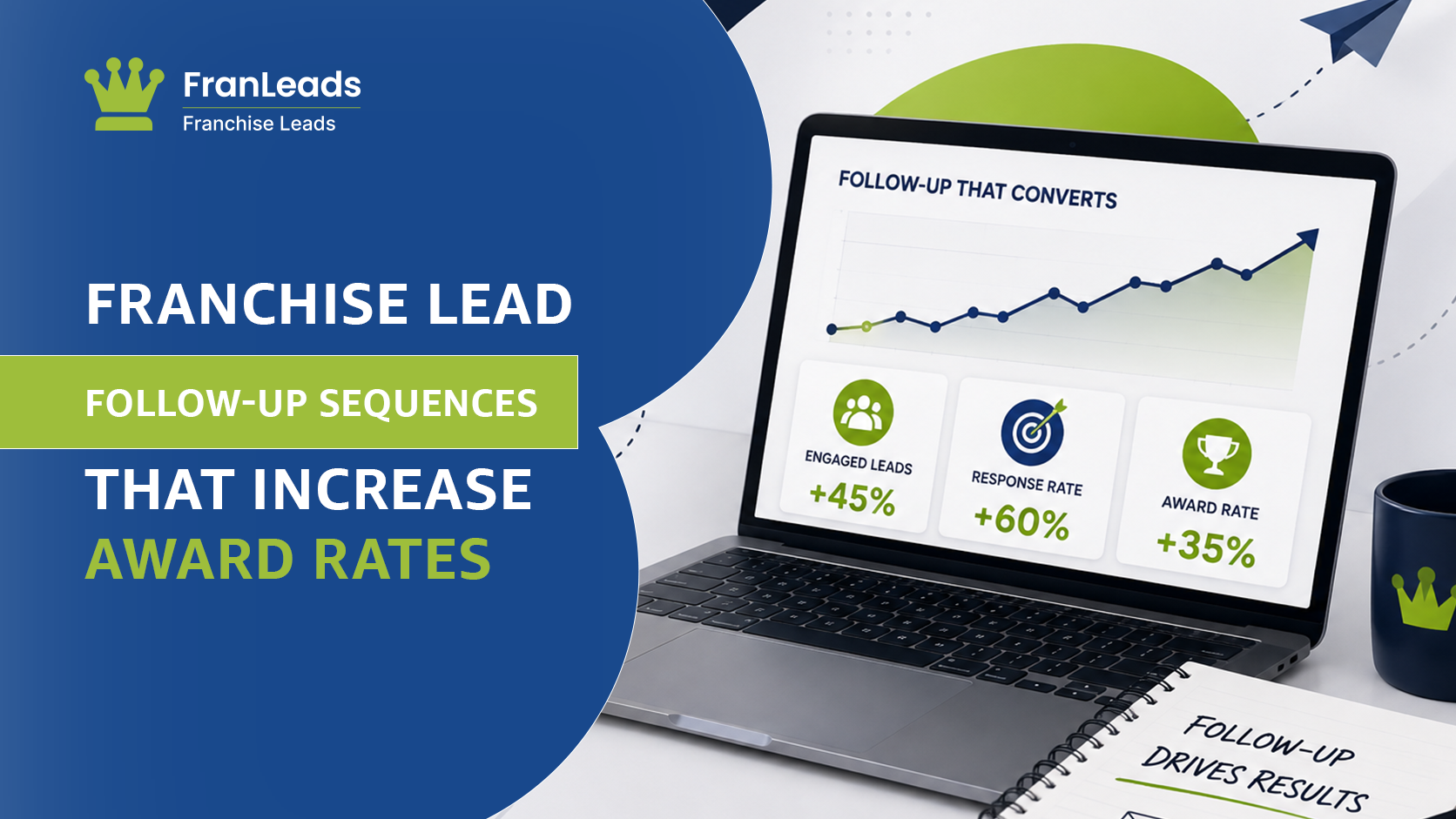
That’s why a massive percentage of franchise leads don’t fail because of price, concept, or competition; they fail because the follow-up sequence is weak, inconsistent, or stops too early.
Here are some ways that successful franchise brands create follow-up sequences that are effective in boosting award rates, rather than just response rates.
Table of Contents
- The Hard Truth About Franchise Leads
- Why Follow-Up Drives Award Rates (Not Just Replies)
- The 3 Phases of High-Converting Franchise Follow-Up
- Phase 2: Validation & Education (Day 4–21)
- Phase 3: Long-Tail Nurture (Day 22–90+)
- What High-Performing Follow-Up Sequences Include
- Common Follow-Up Mistakes That Kill Award Rates
- What This Means for Franchisors
The Hard Truth About Franchise Leads
Franchise buyers rarely decide on the first interaction.
They are:
- comparing multiple brands
- validating risk
- aligning finances
- timing life decisions
If your follow-up stops after one call or two emails, you didn’t lose the lead, you abandoned it.
Why Follow-Up Drives Award Rates (Not Just Replies)
Reply rates measure interest.
Award rates measure confidence.
Strong follow-up sequences:
- keep momentum alive
- reduce uncertainty over time
- position the brand as professional and steady
- guide buyers through a decision process
Silence creates doubt.
Structure builds trust.
The 3 Phases of High-Converting Franchise Follow-Up
Phase 1: Immediate Momentum (Day 0–3)
This phase protects intent.
Best-in-class brands:
- respond within 5 minutes
- confirm next steps clearly
- send a recap after the first call
- schedule the next touch immediately
Channels used:
- phone
- SMS
Goal:
Move from interest → structured conversation fast.
Phase 2: Validation & Education (Day 4–21)
This is where the majority of deals get sold or go down the drain. A clear follow-up sequence structure for the franchise helps to keep the buyers interested throughout the process and it provides them with the necessary information at each stage.
Effective sequences include:
- franchisee validation introductions
- unit economics explanations
- territory clarity
- realistic timelines
- common objection education
Content here should:
- answer questions before they’re asked
- normalize concerns
- show transparency, not pressure
Buyers convert faster when uncertainty drops.
Phase 3: Long-Tail Nurture (Day 22–90+)

Many qualified buyers aren’t ready now.
High award-rate brands:
- follow up for 60–120 days
- stay helpful, not pushy
- reference earlier conversations
- resurface territory availability or timing
This is where most competitors disappear.
Consistency wins.
What High-Performing Follow-Up Sequences Include
1. Multi-Channel Touchpoints
Email alone is not enough.
Winning sequences combine:
- calls
- SMS
- calendar reminders
Different buyers respond to different channels.
2. Clear Purpose for Every Touch
Every follow-up should answer:
- Why am I reaching out now?
- What decision does this help the buyer make?
Random check-ins kill momentum.
Purposeful follow-ups move deals forward.
3. Buyer-Stage Messaging
Not all leads are equal.
Sequences should adapt based on:
- early exploration
- financial validation
- territory evaluation
- decision readiness
One-size-fits-all follow-up signals inexperience.
Ready to Scale Your Franchise Brand?
Every lead that reaches your inbox has already been vetted and matched to your territory, so you only speak with serious buyers.
4. Scarcity Without Pressure
High-converting brands don’t threaten.
They clarify:
- territory demand
- timing windows
- next steps
Clarity creates urgency more effectively than pressure.
Common Follow-Up Mistakes That Kill Award Rates
- stopping after one unanswered call
- generic “just checking in” emails
- inconsistent rep behavior
- lack of CRM discipline
- over-selling too early
- disappearing after objections
Most buyers don’t say “no.”
They drift away.
What This Means for Franchisors
If you want more awarded franchisees without increasing ad spend:
- improve follow-up discipline
- extend nurture timelines
- standardize sequences
- train reps on buyer psychology
The biggest conversion gains usually happen after the first call.
FAQ
Follow-up should be consistent with franchise leads throughout the following weeks or months, depending on where they are in the buying process and how interested they are.
Calls, SMS, emails, educational content, territory updates, and clear next steps are all examples of a strong franchise lead follow-up sequence.
Follow-up can be beneficial for qualified leads for 60–120 days or longer, particularly when buyers need more time to evaluate finances, territories, and the business opportunity.
Consistent follow-up keeps qualified prospects engaged, addresses questions and concerns, and helps move interested buyers toward the next stage of the franchise sales process.
Common mistakes include stopping follow-up too soon, sending generic emails, overselling the opportunity, and failing to follow up after addressing objections.
Conclusion
Franchise award rates aren’t won on day one.
They’re won through:
- speed
- structure
- consistency
- and professional follow-up
Brands that master follow-up don’t just close more deals; they build predictable franchise growth engines.
Because in franchise sales,
the follow-up is the funnel.
Ready to Scale Your Franchise Brand?
Every lead that reaches your inbox has already been vetted and matched to your territory, so you only speak with serious buyers.

